Can an Unaccompanied Minor Take a Connecting Flight?

When a child is flying alone, parents naturally want to know whether their child can change planes safely during a journey. Can an unaccompanied minor take a connecting flight? Yes, some airlines allow children traveling alone to take connecting flights, but the rules depend on the child's age, the airline's unaccompanied minor policy, the type of connection, and whether the flights are on the same ticket.
Booking a connecting itinerary for a child requires more planning than booking a nonstop flight. Parents should understand whether the airline permits connections, who supervises the child between flights, and what happens if the first flight is delayed.
This guide explains how connecting flights work for children traveling alone, what parents should check before booking, and how to prepare for a smoother journey.
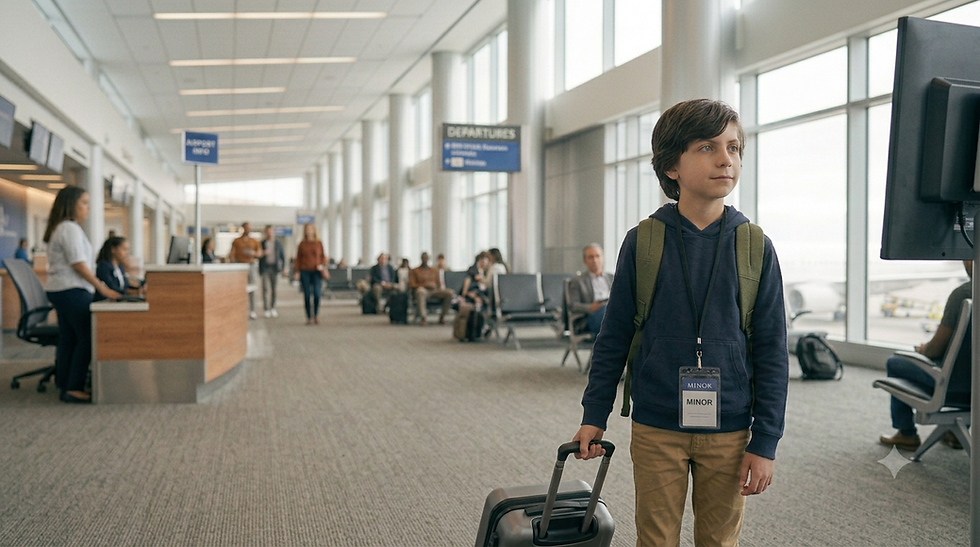
Can a Child Flying Alone Take a Connecting Flight?
Yes, a child flying alone may be permitted to take a connecting flight, provided the airline's policies allow it. However, permission is not universal. Some airlines restrict unaccompanied minors to nonstop flights, while others permit connections under specific conditions.
For example, an airline might allow a 12-year-old to connect through one of its major hubs but prohibit a connection involving another airline. Another carrier might require the child to use its supervised unaccompanied minor service throughout the journey.
Before purchasing a ticket, check these requirements:
Minimum age: Find out whether the child qualifies for the airline's unaccompanied minor service.
Connection restrictions: Determine whether connections are allowed and whether there is a limit on the number of stops.
Airline combinations: Confirm that every carrier on the itinerary accepts unaccompanied minors.
Airport procedures: Ask who escorts the child between gates and whether the child must pass through security again.
Disruption arrangements: Learn what happens if the child misses a connection or a flight is canceled.
Parents arranging travel for a student can also explore student flight booking options when comparing suitable itineraries.
How Do Airlines Handle Connecting Flights for Unaccompanied Minors?
Airlines generally have procedures for children traveling alone, but the level of supervision varies. Depending on the carrier and service booked, staff may help the child check in, escort them through designated airport areas, coordinate boarding, and release them only to an authorized adult at the destination.
A connecting journey introduces an additional responsibility: making sure the child reaches the next flight safely and follows the airline's transfer procedures.
1. Check-In and Departure
Parents or guardians may need to complete paperwork, provide identification, and share the names and contact information of the adults dropping off and collecting the child. Some airlines require the accompanying adult to remain at the airport until the flight departs.
2. Transfer Between Flights
At the connecting airport, the airline may arrange staff assistance, direct the child to a designated waiting area, or provide an escort to the next gate. The exact process depends on the airline, airport, and service purchased.
Never assume that an airline employee will automatically accompany the child throughout every transfer. Confirm the supervision arrangements before booking.
3. Arrival and Pickup
At the final destination, the child may be released only to the adult named in the travel arrangements after the airline verifies that person's identity. The pickup adult should arrive early, carry acceptable identification, and follow the airline's collection instructions.
What Age Can a Child Fly Alone With a Connection?
There is no single age rule that applies to every U.S. airline. Carriers establish their own minimum ages, supervision requirements, and connection restrictions.
The following table is a general planning guide, not a substitute for the airline's current policy.
Child's age | What parents should check |
Under 5 | Many airlines do not accept children this young for unaccompanied travel. |
5–7 | Some carriers accept children only on eligible nonstop flights. |
8–11 | Certain airlines permit connections under their unaccompanied minor service; others impose tighter restrictions. |
12–14 | Policies vary. Supervision may be mandatory or optional, depending on the airline. |
15–17 | Some carriers allow more independent travel, but connection and service rules still apply. |
These age ranges are illustrative, not universal. A child's eligibility must be checked against the operating airline's rules for the specific itinerary.
Also, an airline may distinguish between the age at which a child can travel alone and the age at which the child can take a connecting flight. Meeting the minimum age requirement does not automatically mean every itinerary is permitted.
Are Connecting Flights on Different Airlines Allowed?
Not always. A connection involving multiple airlines can be more complicated than a connection operated by one carrier.
For example, a child might fly from Dallas to Chicago with one airline and then continue from Chicago to Boston with another. Even if both airlines accept children traveling alone, their policies may differ regarding supervision, transfer procedures, baggage handling, and responsibility during delays.
Before booking, confirm:
Whether both airlines accept unaccompanied minors on the proposed route.
Whether the airlines recognize and coordinate the connection.
Whether the child must collect and recheck checked baggage.
Whether an adult escort is available between flights.
Whether the child can be assisted if a flight change becomes necessary.
Whenever possible, consider a single-airline itinerary with a permitted connection. A nonstop flight is often simpler because it removes the transfer between aircraft.
How to Choose the Safest Connecting Flight for a Child
The cheapest itinerary is not always the most appropriate choice for a child flying alone. Parents should compare the full travel experience, including connection time, airport layout, operating carrier, and available assistance.
Choose a Manageable Connection Time
A very short layover may leave little time to reach the next gate, especially if the first flight arrives late. However, an unnecessarily long connection can mean a tiring wait.
Ask the airline what minimum connection time it accepts for an unaccompanied minor. Choose an itinerary with a practical buffer, and avoid overnight connections unless the airline explicitly permits them and confirms the supervision arrangements.
Prefer Simpler Itineraries
Fewer flight segments mean fewer transfers and fewer opportunities for a missed connection. When available and permitted, choose a nonstop route. If a connection is necessary, look for one with a straightforward transfer at a single airport.
Review the Booking Carefully
Before paying, review the complete itinerary, operating carriers, baggage arrangements, and unaccompanied minor fees. A useful online flight ticket booking guide can help parents understand the details to review before confirming an itinerary.
Confirm the Booking Directly With the Airline
Ask the airline to confirm the child's eligibility, the permitted connection, required documents, fees, and transfer arrangements in writing when possible. You can use this flight booking guide as an additional planning resource.
What Documents Does a Child Need to Fly Alone?
Document requirements depend on the child's age, destination, airline, and whether the trip is domestic or international.
For a domestic flight within the United States, children under 18 generally are not required by the TSA to present identification when traveling within the country, but airlines can have their own requirements. Parents should verify what the airline requires for the child's booking and check-in.
For international travel, a valid passport is generally required, and some destinations may require visas, consent documents, or additional paperwork for minors traveling without a parent. Requirements vary by country.
Prepare a document folder containing, as applicable:
The child's ticket or booking confirmation.
The airline's unaccompanied minor forms.
Parent or guardian contact information.
The name and contact details of the authorized pickup adult.
Required passport, visa, and travel consent documents.
Any identification required by the airline.
Parents can review the REAL ID requirements for flying for general U.S. identification guidance, while separately confirming the rules that apply to their child.
What Happens if a Child Misses a Connecting Flight?
A missed connection can happen because of weather, delays, operational changes, or other disruptions. Parents should know the airline's response before the child departs.
If a child misses a connection, the airline's procedures may include placing the child under staff supervision, arranging an alternative flight, and contacting the parent or guardian. The specific response depends on the carrier, the reason for the disruption, and the itinerary.
Parents should ask these questions in advance:
Who supervises the child while waiting for a replacement flight?
How will the airline contact the parent or guardian?
Can the child be rebooked without a parent being physically present?
What happens if the disruption requires an overnight stay?
Who is responsible for arranging any required accommodation and supervision?
Give the child a charged phone if permitted and appropriate, along with written emergency contacts. Explain that the child should remain with designated airline staff and never leave the supervised area with an unfamiliar person.
Final Thoughts
An unaccompanied minor can take a connecting flight on some airlines, but permission depends on age, airline policy, the route, and the connection arrangements. Parents should verify every segment before booking and avoid assuming that all carriers offer the same level of supervision.
Whenever possible, choose a simple itinerary, allow adequate connection time, prepare the required documents, and confirm the pickup procedure. With careful planning and clear communication with the airline, families can make more informed decisions about children traveling alone.
Frequently Asked Questions
Q 1. Can a child flying alone take a connecting flight?
Yes. Some airlines permit children traveling alone to take connecting flights if they meet the age requirements and follow the airline's unaccompanied minor policy.
Q 2. What is the minimum age for a child to take a connecting flight alone?
The minimum age depends on the airline. For example, Delta generally permits children ages 8–14 to take eligible connecting flights, while children ages 5–7 are limited to eligible nonstop flights. Always verify current rules before booking.
Q 3. Is an unaccompanied minor service required for connecting flights?
Some airlines require this service for children within specified age ranges. Other airlines make it optional for older teenagers. The requirement depends on the carrier and the child's age.
Q 4. Can a child flying alone connect between different airlines?
Some airlines prohibit connections involving other carriers, including certain partner and codeshare flights. Check the operating airlines' policies before purchasing the ticket.
Q 5. Will airline staff help a child change planes?
When the airline's unaccompanied minor service covers the itinerary, designated staff may escort the child between gates or to a supervised waiting area. The exact assistance varies by airline and airport.
Q 6. What happens if a child misses a connecting flight?
The airline may arrange an alternative flight and contact the parent or guardian listed on the child's travel documents. Parents should confirm the carrier's procedures for delays, cancellations, and overnight disruptions before departure.
Q 7. Can a child flying alone take an overnight connecting flight?
Many airlines restrict or prohibit overnight connections for unaccompanied minors. Check the specific airline's policy and choose an itinerary that complies with its rules.
Q 8. Does a child need identification to fly alone within the United States?
TSA generally does not require travelers under 18 to show identification for domestic air travel. However, airlines may have their own documentation requirements, particularly for unaccompanied minors.
Q 9. Should parents book a nonstop flight instead of a connecting flight?
A nonstop flight is often simpler because it eliminates the need to transfer between aircraft. If a connection is necessary, select an airline-approved itinerary with suitable transfer time and confirmed supervision.
Q 10. What should parents pack for a child traveling alone?
Pack the child's travel documents, emergency contact details, a charged phone if appropriate, necessary medication, snacks, and a small carry-on bag. Explain how to contact airline staff and what to do if a flight is delayed.


Comments